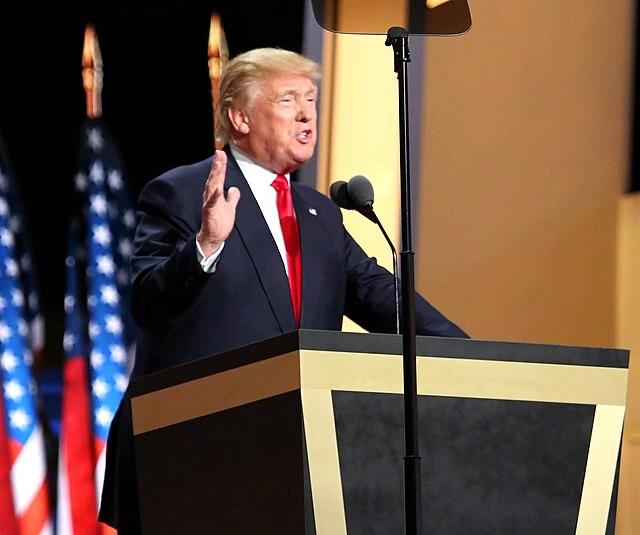
President Donald Trump said he may consider using the Insurrection Act as protests linked to immigration enforcement continue to grow in Minneapolis.
The warning followed another tense night in the city, where demonstrations, property damage, and confrontations with authorities were reported after a federal immigration officer was involved in a shooting. The incident has added new pressure to an already volatile situation.
Shooting Sparks New Wave of Unrest
According to the Department of Homeland Security, a federal agent opened fire after being attacked during a vehicle pursuit involving a Venezuelan national, Julio Cesar Sosa-Celis. Authorities said he was later joined by two other Venezuelan men, Alfredo Alejandro Ajorna and Gabriel Alejandro Hernandez-Ledezma.
DHS reported that the three men assaulted the officer using a snow shovel and a broom handle. The agent then fired a single defensive shot, striking Sosa-Celis in the leg. Both the officer and the suspect were taken to the hospital with non-life-threatening injuries. All three suspects were arrested.
Homeland Security Secretary Kristi Noem described the incident as an attempted killing of a federal officer, saying the agent was “ambushed and attacked.”
Protests Turn Violent
Following the shooting, protests erupted in the Hawthorne neighborhood of Minneapolis. Police said officers were struck with fireworks, ice, and snowballs.
Several federal vehicles were damaged, and property was stolen from inside them. The FBI later announced a reward of up to $100,000 for information leading to the recovery of stolen government property or the arrest of those responsible.
Federal authorities say about 3,000 officers have been deployed to Minnesota in recent weeks.
Trump Issues Warning
Writing on Truth Social, Trump warned that he could turn to the Insurrection Act if authorities in Minnesota were unable to contain what he described as organized groups seeking to provoke disorder.
The Insurrection Act, first enacted in 1807, authorizes a U.S. president to deploy active-duty military forces for domestic law enforcement purposes. Trump has previously discussed the law but has never formally invoked it.
Political Leaders Urge Calm
Minneapolis Mayor Jacob Frey said the situation in the city was no longer sustainable and called for reduced tensions.
Minnesota Governor Tim Walz also urged restraint, saying leaders must avoid escalating unrest. “We cannot fan the flames of chaos,” he said in a social media post.
Walz, who ran as the Democratic vice-presidential candidate in 2024, recently announced he would not seek re-election following a separate welfare fraud scandal in the state.
Background of the Crisis
The unrest began after ICE agent Jonathan Ross fatally shot 37-year-old Renee Nicole Good on January 7. Federal officials claim the agent acted in self-defense, while local leaders dispute this assertion.
Footage shared online shows agents approaching Good’s car as it was stopped in the street. As she attempted to drive away, an officer fired multiple shots. The FBI is continuing its investigation.
Public reaction has been sharply divided. A fundraiser for Good’s family has raised more than $1.4 million, while another campaign supporting the ICE agent has collected over $740,000.
Federal Operations Continue
Despite legal challenges from Minnesota prosecutors, a federal judge has allowed immigration operations under “Operation Metro Surge” to continue. The Trump administration says the program is necessary for public safety and border enforcement.
As protests continue, the possibility of military involvement has added further political and legal pressure to an already volatile situation.