

US President Donald Trump has announced a new 10% tariff on imports from most countries, moving swiftly after the Supreme Court of the United States struck down his previous global tariff program.
The decision comes just hours after the court ruled that the administration exceeded its authority when it imposed wide-ranging import taxes last year. The ruling blocks most of those measures and marks a significant legal setback for the president’s trade agenda.
Trump criticized the decision, calling it damaging to US interests, and said his administration would pursue alternative legal routes to continue applying trade pressure.
Supreme Court Ruling Curbs Tariff Authority
In a 6–3 decision, the Supreme Court found that the president had overstepped the limits of his powers by relying on emergency legislation to justify the tariffs. The majority ruled that Congress had not granted the executive branch open-ended authority to impose broad import taxes.
Chief Justice John Roberts wrote that when Congress has delegated tariff powers in the past, it has done so clearly and with strict boundaries. He added that Congress could not assume such authority without explicit language in the law.
The decision received backing from the court’s three liberal justices and two conservative justices who had been nominated by Trump. Three other conservative justices dissented.
Trump Signs New 10% Tariff
Speaking from the White House, Trump stated that the ruling would not deter his efforts to reshape U.S. trade policy. Shortly afterward, he signed a proclamation imposing a new 10% tariff using Section 122 of US trade law.
Section 122 lets the president impose temporary tariffs of up to 15% for 150 days, after which Congress must approve any extension. The new tariff will take effect on 24 February.
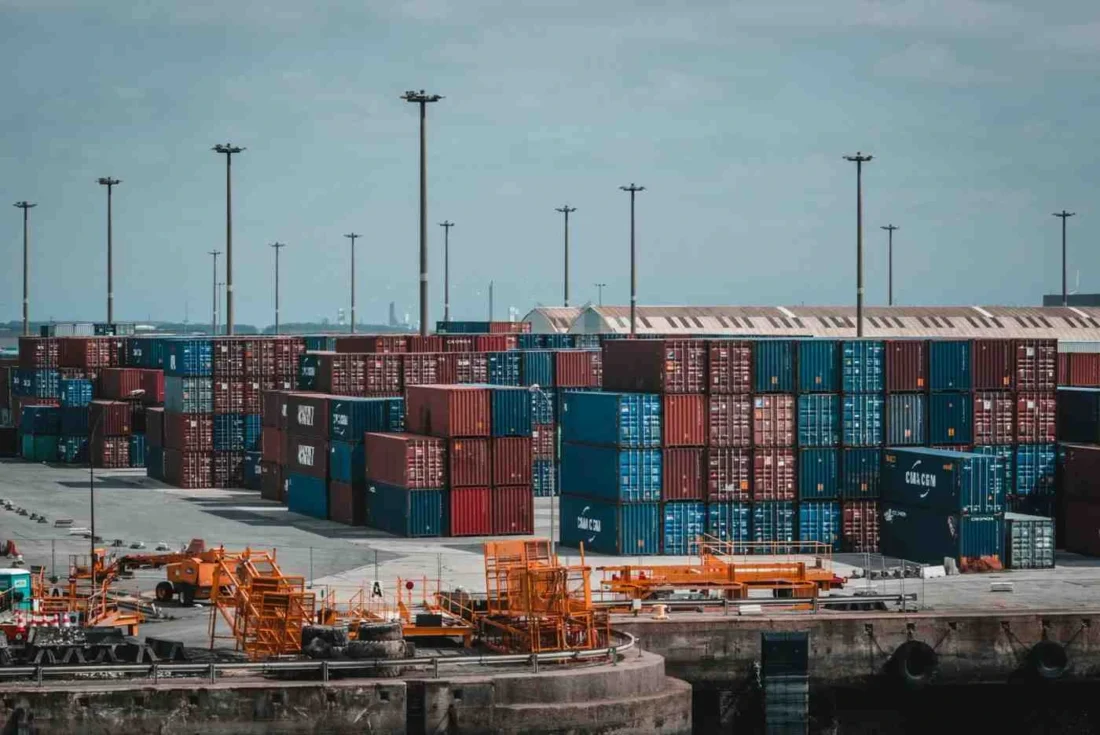
Administration officials said the president designed the measure to protect domestic manufacturing and encourage investment in the US—objectives he has emphasized repeatedly throughout his presidency.
Exemptions and Impact on Trade Partners
Not every import will be affected by the new tariff. The order leaves out some minerals, natural resources, fertilizers, pharmaceuticals, certain electronics, and a selection of vehicles. A few agricultural products, including beef and oranges, are also spared.
Even so, the guidance is vague in many areas. Companies importing these goods may still be unsure which specific items qualify for exemptions, and officials plan to clarify the details in the coming weeks.
Canada and Mexico will continue to benefit from exemptions under the US-Mexico-Canada Agreement, which covers most trade within North America.
According to a senior White House official, countries that previously negotiated trade agreements with the US—including the UK, India, and members of the European Union—will now face the flat 10% tariff instead of their earlier negotiated rates. The administration expects those countries to continue honoring commitments made under existing trade deals.
Markets Rise as Businesses React
US financial markets rose following the Supreme Court ruling, with investors welcoming clarity around the legal status of the earlier tariffs. Major stock indexes ended the day higher as companies digested the news cautiously.
Several businesses affected by the previous tariffs said the ruling provides some relief, but many added that it will take time for their supply chains, disrupted by the earlier duties, to return to normal. Business groups also expressed concern about the uncertainty created by the new temporary tariff.
Several state leaders said businesses and consumers deserve refunds for tariffs collected under the invalidated measures, though the process for repayment remains unclear.
Refunds and Legal Uncertainty Ahead
While the court’s decision opens the door for refund claims, it does not set out a clear mechanism for returning funds. Legal experts say the issue will likely be handled by the Court of International Trade, potentially leading to prolonged litigation.
Trump indicated that any refund process would face legal challenges and could take years to resolve.
Economists warned that pursuing claims could discourage smaller companies from seeking refunds, even if they ultimately qualify for repayment. Some have called on the government to establish a simplified process to avoid forcing firms into court.
Global Response Remains Cautious
Countries around the world have so far responded carefully to the Supreme Court’s ruling and the new tariff. European officials said they are studying the decision to determine how it might affect trade and economic relations. In France, government leaders emphasized the ruling as a clear example of how democratic systems use checks and balances to limit the powers of government.
The US government has already collected at least $130 billion in tariffs under the emergency law used for the earlier measures. In recent weeks, hundreds of companies across the manufacturing, retail, and food import sectors have filed lawsuits challenging the tariffs.
Analysts say the administration could now apply other trade laws to impose tariffs on national security grounds or to address unfair trade practices. Trump previously used these tools on industries such as steel, aluminum, and automobiles, which the court’s ruling did not affect.
As legal battles continue and new tariffs take effect, businesses and global trade partners face renewed uncertainty over the direction of US trade policy.