
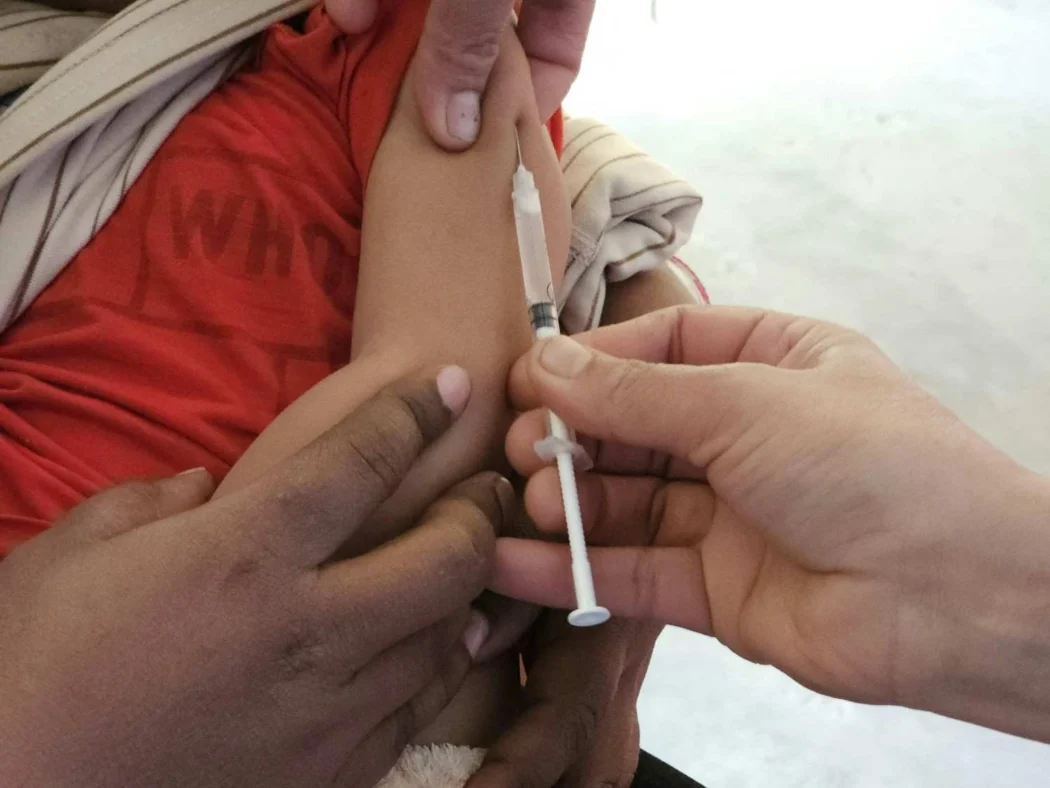
In north London, several schools are reporting a measles outbreak. So far, at least 34 children have fallen ill. Parents and teachers are worried as the virus appears to be spreading quickly.
Most cases have been reported in Enfield, where laboratory tests in January confirmed the infections, according to the UK Health Security Agency.
Doctors in the area say about one in five children who caught measles needed hospital care. Most of them had not received all their routine vaccinations, highlighting the importance of staying up-to-date with immunization.
Health officials urged parents and carers to ensure children are up to date with immunizations. Measles spreads easily and can lead to serious health complications.
Schools across two boroughs are affected
Health services in Enfield confirmed cases in at least seven schools across Enfield and neighboring Haringey. Officials described the outbreak as fast-moving and affecting multiple education settings.
The 34 cases in Enfield make up more than a third of the 96 measles cases reported across England in the first month of the year.
Councillor Alev Cazimoglu said the outbreak has mainly affected children. Some required additional medical care and short hospital stays. She urged families to act quickly if vaccinations are incomplete.
Enfield Council said it is working closely with health agencies, the NHS, and local partners. The council aims to limit further spread by following national public health guidance.
Unvaccinated children are most at risk
Health officials said the outbreak is mostly affecting unvaccinated children under the age of 10. Many cases were linked to schools and nurseries.
Dr. Vanessa Saliba warned that measles can cause severe illness in children. In rare cases, it can lead to long-term complications or death. She said two doses of the MMRV vaccine offer strong protection.
She urged families to catch up on missed vaccinations as soon as possible. Doing so helps protect vulnerable children who cannot be vaccinated for medical reasons.
Dr. Saliba also advised families travelling abroad during the Easter holidays to check vaccination records. Measles remains widespread in several countries with close links to the UK, including parts of Europe.
Vaccination rates remain below target
Measles cases continue to rise in the UK and globally. Health experts link the increase to falling vaccination rates.
Recent figures show that 84.4% of children in the UK received both recommended MMR doses by the age of five. Public health guidance recommends coverage of at least 95% to prevent outbreaks.
Vaccination uptake has declined over the past decade. Rates peaked at 88.8% in 2014–15.
Earlier this year, the World Health Organization said the UK had lost its measles elimination status following outbreaks recorded in 2024.
What is measles, and what are the symptoms?
Measles is a serious illness that spreads very easily, and children are often the most affected. The virus moves quickly from person to person through coughs and sneezes or when someone touches surfaces that have been contaminated.
Signs of measles do not appear straight away. In most cases, children start to feel unwell about one to two weeks after catching the virus. Many children first develop a fever as an early sign of the illness. This is usually followed by sore, watery eyes, a runny nose, coughing, and frequent sneezing.
Small white spots can sometimes be seen inside the mouth during the early stages of the illness.
A few days later, a blotchy red or brown rash often appears. It typically starts on the face or behind the ears before spreading to other parts of the body. On darker skin tones, the rash may be less obvious but is still present.