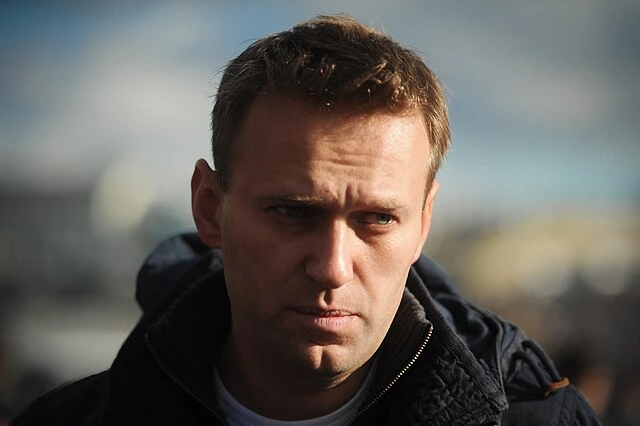
UK and European allies blame Russia for the death of opposition leader Alexei Navalny, saying a rare frog-derived poison was found in his body.
Investigators reached this conclusion after a two-year forensic inquiry into Navalny’s death in a Siberian penal colony. Laboratories confirmed the presence of epibatidine, a powerful neurotoxin not found naturally in Russia.
British Foreign Secretary Yvette Cooper said the findings clearly point to the Russian state. She explained that only Russian authorities had the means, motive, and access to use such a substance while Navalny remained in custody.
“There is no credible alternative explanation,” Cooper said while speaking at the Munich Security Conference.
European governments assign responsibility
In a joint statement, the UK, France, Germany, Sweden, and the Netherlands said Russia bears responsibility for Navalny’s death. Specifically, the countries said the toxin could only have been deliberately administered during his imprisonment.
Moreover, experts noted that epibatidine appears only in certain wild dart frogs in South America. By contrast, captive frogs do not produce the toxin, and it does not exist naturally in Russia.
Therefore, the statement concluded that no innocent explanation exists for its presence in Navalny’s body.
The Kremlin rejects the findings
However, Russian officials dismissed the conclusions. State media quoted Kremlin representatives as calling the accusations a coordinated information campaign.
Meanwhile, President Vladimir Putin avoided naming Navalny during his lifetime. Later, he referred to the death only briefly, describing it as a sad event.
UK alerts chemical weapons watchdog
In response to the findings, the UK government confirmed it has informed the Organisation for the Prohibition of Chemical Weapons. Officials said the alleged use of the toxin may breach the Chemical Weapons Convention.
At the same time, UK Prime Minister Sir Keir Starmer praised Navalny’s courage. He said Navalny’s efforts continue to challenge authoritarian rule.
Navalny’s widow welcomes conclusions
Following the announcement, Navalny’s widow, Yulia Navalnaya, welcomed the findings. She said the conclusions confirmed her long-held belief.
She said she had no doubts from the earliest days that her husband did not die naturally. “Now the evidence proves it.”
In addition, she thanked European governments for their careful and determined investigative work.
Background to Navalny’s death
Navalny died on 16 February 2024 at the age of 47 while serving a prison sentence in an Arctic penal colony. According to Russian authorities, he felt unwell during a short walk, collapsed, and never regained consciousness.
Previously, in 2020, Navalny survived a poisoning involving the nerve agent Novichok. After recovering abroad, he later traveled back to Russia. Authorities then arrested and jailed him on charges critics described as politically motivated.
Experts warn of extreme toxicity
According to toxicology specialists, epibatidine ranks among the most powerful neurotoxins known. The substance attacks the central nervous system and can cause seizures, paralysis, respiratory failure, and death.
Furthermore, scientists say acquiring and deploying the toxin would require advanced technical expertise. For that reason, experts describe its alleged use as rare and deliberate.