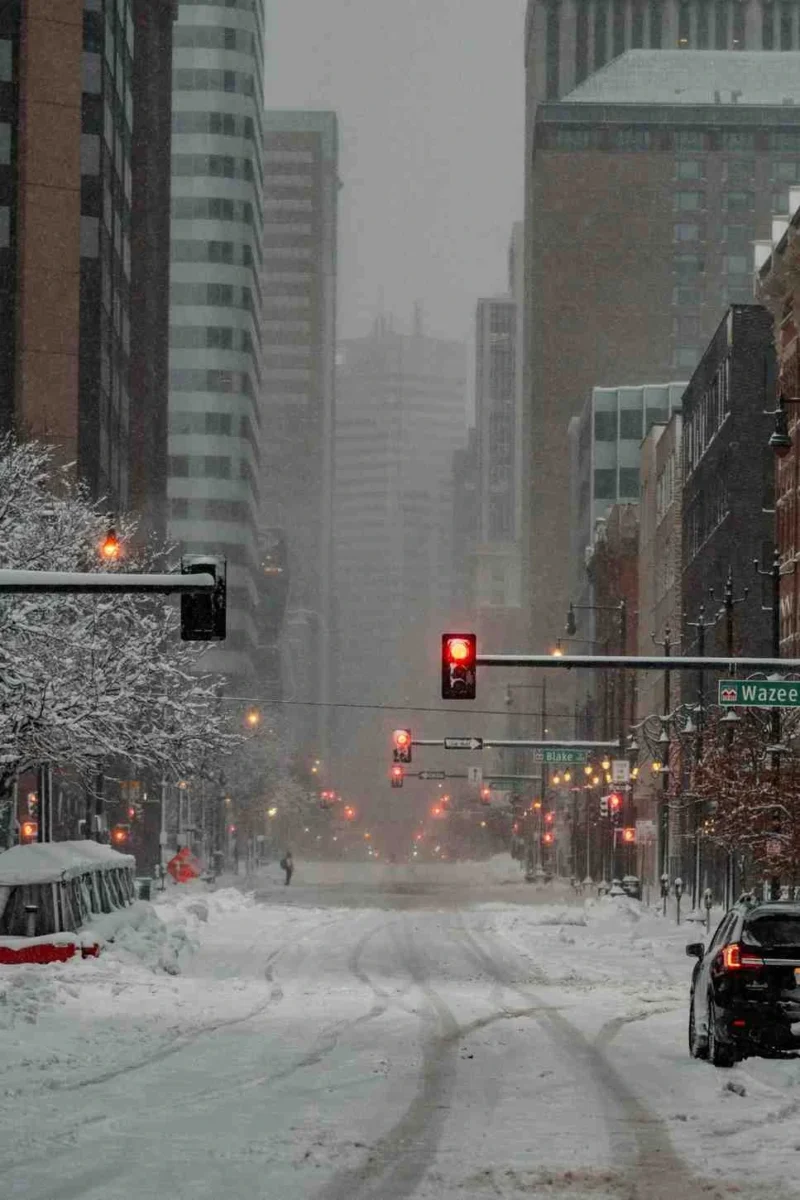
A major winter storm is set to hit large parts of the United States on Friday. More than 160 million people could face heavy snow, ice, and bitter cold.
The system is moving east from the High Plains and the Rocky Mountains. As it moves east, it will bring hazardous conditions to wide areas of the country. Forecasters say the storm may linger, increasing the risk in several regions.
An Arctic blast behind the storm will drive temperatures sharply lower. Wind chills could reach dangerous levels, especially for people outdoors for long periods. Health officials warn of a higher risk of frostbite and hypothermia.
Over the weekend, we anticipate travel problems. Airport authorities have warned of delays and cancellations in major cities. Officials are also urging drivers to prepare for rapidly worsening road conditions.
Snow is likely to fall across a broad stretch of the country. Cities including Memphis, Nashville, Washington, D.C., Baltimore, Philadelphia, and New York could all see snowfall. The storm will bring heavy snow from the Southern Rockies and Plains into the Mid-Atlantic and Northeast.
Some areas from Colorado to West Virginia and as far northeast as Boston may receive more than a foot of snow.
Temperatures could drop low enough to break long-standing records. In the Northern Plains, wind chills may fall below minus 50 degrees Fahrenheit. The Arctic blast will push freezing temperatures across much of the southeastern United States.
Governors in several states have declared emergencies. Those states include Arkansas, Georgia, Texas, North Carolina, and South Carolina. The declarations allow emergency agencies and National Guard units to move quickly if conditions worsen.
Airlines are preparing for disruption as well. Many carriers are offering passengers the option to change flights without extra fees.
Weather officials are advising people to avoid unnecessary travel during the storm’s peak. They warn that driving could become extremely dangerous in affected areas.
The Arctic system is also affecting Canada. Freezing temperatures have already settled in, and snow is expected in eastern and Atlantic regions in the coming days.
Authorities are urging residents to closely monitor weather updates. Authorities also advise people to limit travel and take steps to stay safe as the storm moves across the region.