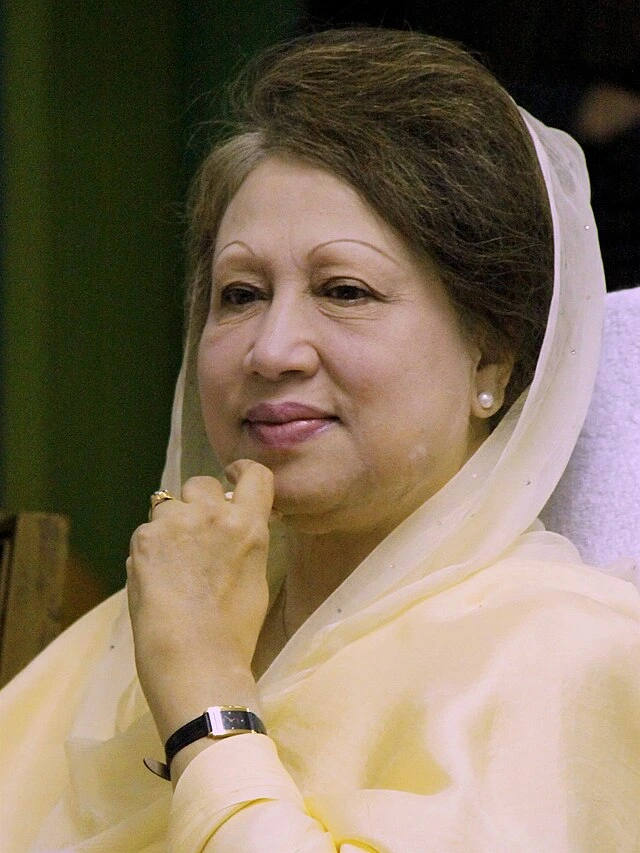
Khaleda Zia, the first woman to serve as Bangladesh’s prime minister, died at 80 after battling a prolonged illness, authorities confirmed on Tuesday. She led the Bangladesh Nationalist Party for decades and remained a central figure in the nation’s politics.
The Bangladesh Nationalist Party (BNP), which she led for decades, confirmed her death early Tuesday. The party said Zia passed away at 6 am while receiving treatment at Evercare Hospital in Dhaka.
Physicians had earlier described her condition as extremely critical. Doctors placed her on life support but said her advanced age and multiple health complications limited the available treatment options.
News of her death prompted supporters to gather outside the hospital, reflecting her enduring influence despite years away from public life.
A Leader Shaped by Tragedy
Zia entered politics after the assassination of her husband, President Ziaur Rahman, during a military coup in 1981. Until then, she had remained largely out of the public spotlight.
She went on to lead the BNP and emerged as a key figure during Bangladesh’s return to electoral politics, becoming the country’s first female prime minister in 1991 after its first democratic election in two decades.
Her rise marked a breakthrough in a male-dominated political environment and reshaped the nation’s leadership landscape.
Political Career and Rivalries
Zia was widely known for her long-running rivalry with Sheikh Hasina, Bangladesh’s other dominant political leader. The rivalry defined national politics for more than three decades.
During her first term in office, she restored parliamentary democracy and advanced initiatives in women’s education and social development. Constitutional reforms during this period received cross-party backing.
However, her second term in 1996 lasted only weeks and drew criticism over an election boycotted by the opposition. She returned to power in 2001, serving until 2006, when her government faced strong allegations of corruption.
Zia refuted any wrongdoing and asserted that the cases against her had political motivations.
Years in Prison and Final Political Chapter
Over the past 16 years under the Awami League government, Zia became a leading symbol of opposition to what critics described as increasingly authoritarian rule.
She boycotted the 2014 general election after the government abolished the caretaker system. Authorities later convicted her on corruption charges, sending her to prison and placing her under house arrest for extended periods.
In January 2025, officials released Zia following mass protests that brought down Sheikh Hasina’s government and forced the former leader into exile.
The BNP had announced plans for Zia to campaign ahead of national elections scheduled for February, the first vote since the political upheaval of late 2024.
Health Struggles and Passing
Doctors hospitalized Zia for more than a month and treated her for kidney damage, heart disease, pneumonia, and other chronic conditions.
Despite her declining health, she remained a symbolic leader for opposition supporters across the country.
Interim government head Muhammad Yunus had earlier urged citizens to pray for her recovery, calling her an inspiration to the nation. Following her death, he described Zia as a “symbol of the democratic movement” and praised her role in advancing multiparty politics and civil rights.
Tributes at Home and Abroad
India’s Prime Minister Narendra Modi expressed deep sorrow over Zia’s passing and acknowledged her contributions to Bangladesh’s development and bilateral relations with India.
He said in a public statement that he hopes her vision and legacy will continue to inspire and guide the partnership.
Zia’s family members, including her son Tarique Rahman, were with her during her final moments, according to the BNP. Rahman, 60, returned to Bangladesh last week after spending 17 years in self-imposed exile in London and is expected to take on a central role in the party’s future leadership.
The BNP called on supporters to pray for Zia’s soul, marking the end of an era in Bangladeshi politics shaped by her influence, resilience, and enduring legacy.